
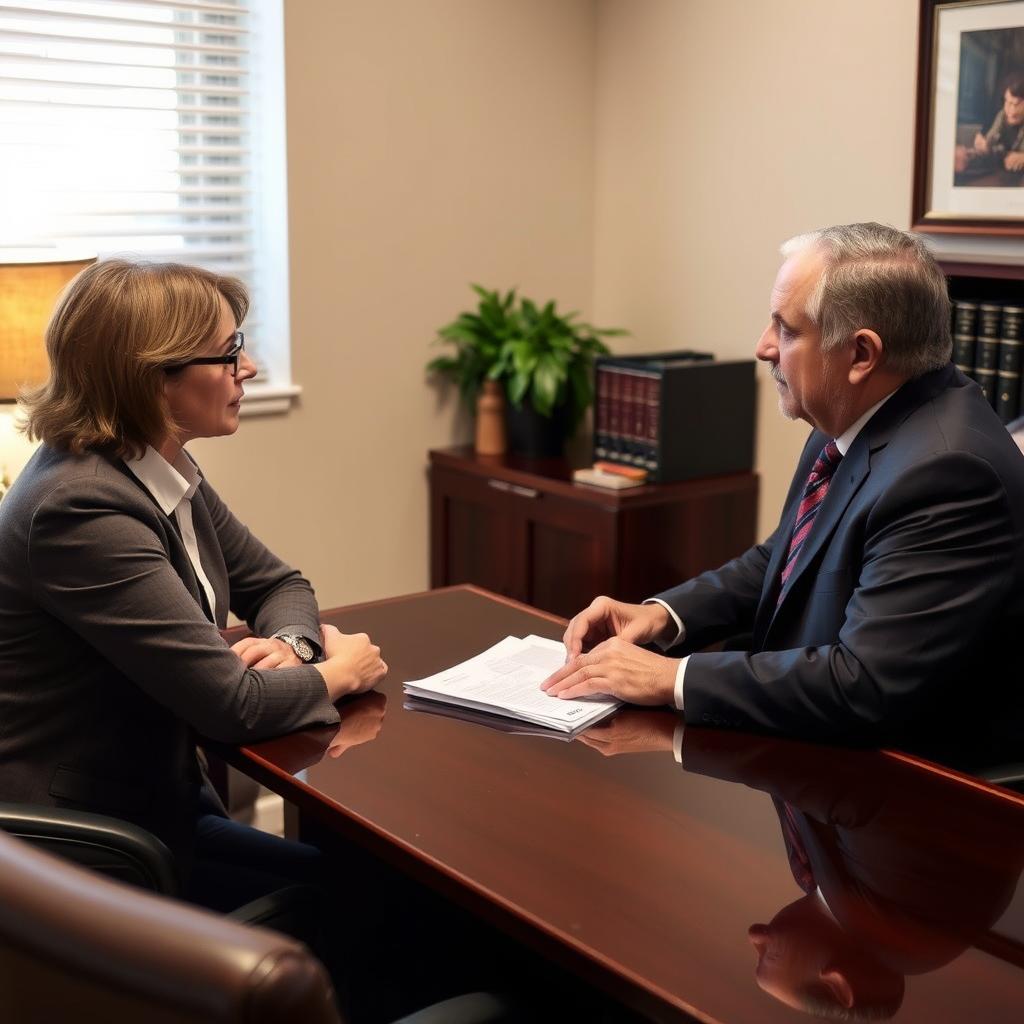
License Revocation Defense Lawyer Falls Church, VA
Losing your driving privileges in Virginia creates immediate challenges—getting to work, managing family responsibilities, and handling daily life all become harder. When a license revocation is on the table, understanding what steps to take and how the process works in Falls Church can make a measurable difference. The Falls Church General District Court, located at 300 Park Avenue, Suite 151W, handles all traffic-related matters, including license-revocation proceedings that stem from serious traffic offenses, repeat violations, or administrative actions by the Virginia Department of Motor Vehicles. Mr. Sris and his Of Counsel regularly appear in this court and are familiar with how these cases are presented and resolved. Contact Law Offices Of SRIS, P.C. at (888) 437-7747 to request a consultation and discuss what is ahead in your specific matter. Law Offices Of SRIS, P.C. – Advocacy Without Borders.
What License Revocation Defense Means in Falls Church
Virginia law separates “suspension” from “revocation” and treats revocation more seriously. A suspension temporarily withdraws your driving privilege; a revocation ends it entirely, requiring you to go through a formal reinstatement process with the DMV once the revocation period runs. In Falls Church, revocation actions often arise from several sources: a conviction for a serious traffic crime such as reckless driving, DUI, or driving after being declared a habitual offender; multiple moving violations within a set timeframe; or a DMV administrative action based on a demerit-point accumulation beyond the statutory threshold. Because the Falls Church General District Court sits within the Seventeenth Judicial District, the judges and prosecutors who handle revocation matters are familiar to the defense team, and local practice nuances can affect how a case unfolds.
For residents of Falls Church and the surrounding areas along Route 7, Route 29, and the I‑66 corridor, a revocation is not just a legal problem—it is a disruption that can last for months or years. Not every revocation notice means the loss is final, however. The right to request an administrative hearing from the DMV or to challenge an underlying criminal conviction in court often exists, and deadlines for doing so are tight. An attorney who appears regularly at the courthouse on Park Avenue understands which arguments resonate and how to present evidence that may persuade a trier of fact to modify or dismiss the charge that triggered the revocation. Because Falls Church is a small independent city whose court dockets move efficiently, being prepared from the first hearing is important.
How Mr. Sris and His Of Counsel Handle License Revocation Cases
Representation begins with a review of the DMV record and the court order or conviction that prompted the revocation. Mr. Sris and his Of Counsel assess whether the underlying charge can be challenged—for example, by attacking the validity of a traffic stop, the calibration of speed‑measurement equipment, or procedural defects in the revocation notice itself. If a criminal conviction set the revocation in motion, the team explores every avenue to file a motion to reconsider, to appeal the conviction to Circuit Court, or to negotiate an amendment that would remove the revocation consequence.
When a DMV administrative hearing is available, counsel prepares a written submission and presents oral argument on the client’s behalf, often demonstrating that the revocation is longer than required by law or that it should be stayed pending an appeal. In court, the approach is methodical: reviewing discovery, interviewing witnesses, and preparing a thorough defense that addresses both the immediate revocation and any underlying criminal charge. The goal in every matter is to help the client regain driving privileges as quickly as the law permits, and to mitigate the downstream consequences a revocation carries for employment, insurance rates, and personal mobility. No outcome can be promised, and each case depends on its own facts; Results may vary.
About Mr. Sris and His Of Counsel Team
Mr. Sris is Owner and Founder of Law Offices Of SRIS, P.C. He is a former prosecutor who has practiced law since 1997 and is admitted to the bars of Virginia, Maryland, the District of Columbia, New Jersey, and New York. Mr. Sris testified before the Virginia House Courts of Justice Committee in support of 2019 HB 635 (chief patron Del. David Bulova). His background gives him insight into how traffic cases are prosecuted and what strategies are effective in defending against serious charges that carry revocation consequences.
Mr. Sris is supported by a team of Of Counsel attorneys who bring a range of relevant backgrounds to the firm’s Falls Church traffic practice. The Of Counsel team includes a former Virginia State Trooper who understands law enforcement procedures, roadside investigation protocols, and the evidentiary weaknesses that can be challenged in a license-revocation hearing. The team collectively handles matters in the Falls Church General District Court and is familiar with local prosecutor expectations and judicial preferences. Together, Mr. Sris and his Of Counsel have represented clients in traffic-related cases across Northern Virginia since the firm’s founding. Prior results do not guarantee a similar outcome.
Frequently Asked Questions
How does a Virginia lawyer defend against license revocation charges in Falls Church?
A defense against a license revocation charge in Falls Church often begins by examining the underlying basis for the revocation—whether it is a criminal conviction, a DMV administrative determination, or a demerit‑point threshold. If the revocation is based on a conviction, counsel may seek to reopen the case, file an appeal, or pursue a charge amendment that eliminates the revocation trigger. If it is a DMV administrative action, an attorney can request a hearing to argue that the revocation is not supported by the record or that its length should be reduced. Procedural errors in the notice or in the police stop that led to the underlying charge can also be raised. Each defense is tailored to the specific facts and to local practice in the Falls Church General District Court.
What should I do if I am facing a license revocation in Falls Church?
If you receive a revocation notice or are convicted of an offense that triggers revocation, contact an attorney promptly—the deadlines to request a hearing or to appeal a conviction are often short. Preserve all documents you have, including the revocation notice, the court disposition, and any correspondence from the DMV. Do not drive once the revocation order takes effect, as driving while under a revocation can lead to additional criminal charges. A lawyer can review your DMV record, determine whether a hearing or appeal is available, and advise you on the steps that may lead to reinstatement. Taking action early keeps more options on the table.
Can a license revocation be reduced to a suspension in Falls Church?
Yes, depending on the circumstances, a revocation may be reduced to a suspension or even vacated entirely if the underlying charge is resolved favorably. For example, if the revocation arose from a reckless‑driving conviction, and that conviction is later amended to improper driving, the revocation consequence may fall away because improper driving is not a criminal offense and does not carry the same DMV consequence. Similarly, in a DMV administrative proceeding, an attorney can present evidence of rehabilitation, hardship, or factual error to persuade the hearing officer to impose a suspension instead of a revocation. Every case turns on its facts, and there is no guaranteed outcome.
How long does a license revocation last in Virginia?
The duration of a license revocation in Virginia varies depending on the reason for the revocation. Revocations tied to certain criminal convictions last for a set period defined by statute; others, such as those based on demerit‑point accumulation, continue until the driver’s point balance falls below a specific threshold. A driver whose license is revoked must apply to the DMV for reinstatement once the statutory period ends, and may be required to pay a reinstatement fee, complete a driver improvement program, and provide proof of financial responsibility. Because the reinstatement timeline depends on the nature of the revocation and on the individual’s driving record, consulting with counsel about the specific revocation order is the most reliable way to understand what lies ahead.
Do I need a lawyer for a license revocation hearing in Falls Church?
While you are not legally required to have an attorney at a DMV hearing or in General District Court, appearing without counsel can put you at a significant disadvantage. The commonwealth is represented by an experienced prosecutor who presents evidence and legal arguments; an individual who represents himself must know the rules of evidence, the applicable statutes, and the procedural mechanisms for challenging the revocation. An attorney who regularly handles license‑revocation matters in Falls Church can cross‑examine witnesses, object to improper evidence, and frame legal arguments that a layperson may not recognize. For a matter that affects the ability to drive—and often the ability to earn a living—having experienced counsel is an important safeguard.
What is the difference between a license suspension and a license revocation?
A license suspension is a temporary withdrawal of driving privileges that ends automatically once the suspension period expires; a revocation ends the driving privilege entirely and requires the driver to apply for reinstatement after meeting all statutory conditions. Because a revocation is a more severe penalty, it carries longer-lasting consequences—for example, a revocation may appear on a driving record for a longer period and may require the driver to retake the written and road tests before a new license is issued. In Falls Church, both suspensions and revocations are often the direct result of a criminal traffic conviction or a DMV administrative determination, and an attorney can often work to have a revocation reduced to a suspension or to eliminate the underlying cause.
Internal Links:
Traffic Lawyer Fairfax County, VA |
Traffic Lawyer Fairfax (City), VA |
Traffic Lawyer Prince William County, VA |
Traffic Lawyer Manassas (City), VA
Virginia Primary Sources:
Virginia Code § 46.2‑389 (license revocation) |
Falls Church General District Court |
Virginia Judicial System
Attorney advertising. Prior results do not guarantee a similar outcome. Results may vary. Case results depend on a variety of factors unique to each case.